Showing posts with label autocoder. Show all posts

Friday, February 22, 2008

Ruby, Perl, and Python medical autocoding

The other day, I created a very large web page that included 20,000 PubMed abstracts and the autocoded output for each.

The web page was apparently too large for some people to view, so I cut it down to show about 10,000 autocoded samples, along with the code for the autocoder in Ruby, Perl and Python. It is all available at:

http://www.julesberman.info/rubycode.htm


For anyone unfamiliar with medical autocoding, a medical autocoder is a software program capable of parsing large collections of medical records (e.g. radiology reports, surgical pathology reports, autopsy reports, admission notes, discharge notes, operating room notes, medical administrative emails, memoranda, manuscripts, etc.) and capturing the medical concepts contained in the text.

The term "autocoding" should be distinguished from "computer-assisted manual coding." Health care workers may use a software enhancement of their Hospital Information Systems to code a section of text as they enter reports into the computer system. Typically, candidate terms and term codes [from a medical nomenclature] are displayed on the same screen as the entered report. The person entering text is often given the option of editing the proffered codes. This process should not be confused with "autocoding" and is not equivalent to the fully automatic and large-scale coding required by biomedical informaticians.

Finding all the concepts in a corpus of text is a necessary and early step in all data mining efforts. The autocoded terms can be used individually as index terms for the document, on a record-by-record basis to produce a concept "signature" that is highly specific for each report, or collectively to relate the frequency of terms within records with the frequency of terms in the aggregate document.

The simple autocoder provided (in Perl, Python, and Ruby programming languages) is fast (about 100 kilobytes of text per second) and nearly perfect. You can check the output yourself for accuracy (in neoplasm terms extracted and coded). A minor modification of the scripts will accommodate any nomenclature for which terms are assigned concept-code numbers.

- Jules Berman

key words: medical software, nomenclature, medical datamining, perl programming, ruby programming, python programming, biomedical informatics, medical informatics, autcoding, autocoder, medical autocoding
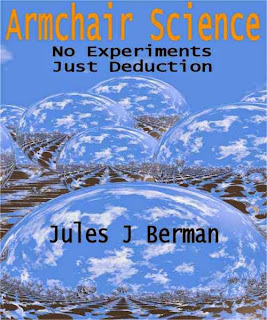
Science is not a collection of facts. Science is what facts teach us; what we can learn about our universe, and ourselves, by deductive thinking. From observations of the night sky, made without the aid of telescopes, we can deduce that the universe is expanding, that the universe is not infinitely old, and why black holes exist. Without resorting to experimentation or mathematical analysis, we can deduce that gravity is a curvature in space-time, that the particles that compose light have no mass, that there is a theoretical limit to the number of different elements in the universe, and that the earth is billions of years old. Likewise, simple observations on animals tell us much about the migration of continents, the evolutionary relationships among classes of animals, why the nuclei of cells contain our genetic material, why certain animals are long-lived, why the gestation period of humans is 9 months, and why some diseases are rare and other diseases are common. In “Armchair Science”, the reader is confronted with 129 scientific mysteries, in cosmology, particle physics, chemistry, biology, and medicine. Beginning with simple observations, step-by-step analyses guide the reader toward solutions that are sometimes startling, and always entertaining. “Armchair Science” is written for general readers who are curious about science, and who want to sharpen their deductive skills.
Wednesday, February 13, 2008

Ruby, Perl and Python medical autocoders

In the past two days on this blog, I've provided very short, fast, and accurate medical autocoders in Ruby and Perl. I thought I might as well offer the equivalent Python script. The Python script runs about twice as fast as either the Ruby or the Perl script.

The Ruby, Perl and Python scripts and their equivalent output are provided at:

http://www.julesberman.info/coded.htm

They are distributed under a GNU license.

All three scripts use a public domain file of 20,000 PubMed Citations, available at:

http://www.julesberman.info/tumorabs.txt

They all use an external tumor nomenclature contained within the Neoplasm Classification and available as a gzipped XML file distributed under a GNU license at:

http://www.julesberman.info/neoclxml.gz

- Jules Berman
Science is not a collection of facts. Science is what facts teach us; what we can learn about our universe, and ourselves, by deductive thinking. From observations of the night sky, made without the aid of telescopes, we can deduce that the universe is expanding, that the universe is not infinitely old, and why black holes exist. Without resorting to experimentation or mathematical analysis, we can deduce that gravity is a curvature in space-time, that the particles that compose light have no mass, that there is a theoretical limit to the number of different elements in the universe, and that the earth is billions of years old. Likewise, simple observations on animals tell us much about the migration of continents, the evolutionary relationships among classes of animals, why the nuclei of cells contain our genetic material, why certain animals are long-lived, why the gestation period of humans is 9 months, and why some diseases are rare and other diseases are common. In “Armchair Science”, the reader is confronted with 129 scientific mysteries, in cosmology, particle physics, chemistry, biology, and medicine. Beginning with simple observations, step-by-step analyses guide the reader toward solutions that are sometimes startling, and always entertaining. “Armchair Science” is written for general readers who are curious about science, and who want to sharpen their deductive skills.

Tuesday, February 12, 2008

Medical autocoding with Perl

In yesterday's blog, I showed a short, simple Ruby script that can provide quick and accurate medical autocoding for medical free-text. I also provided a web site where you could inspect 20,000 PubMed abstract titles and the extracted/coded terms produced by the Ruby autocoder.

Today, I'm providing a web site with the equivalent Perl medical autocoder, along with the public domain output file of 20,000 autocoded PubMed abstracts. Surprisingly (to me) the Perl code executed at about the same speed as the Ruby code. Both autocoders would have significant speed gains if they used the doublet method (which I didn't use here because I wanted to demonstrate the shortest possible scripts). The Perl code is contained on the web page.

- Jules Berman
Science is not a collection of facts. Science is what facts teach us; what we can learn about our universe, and ourselves, by deductive thinking. From observations of the night sky, made without the aid of telescopes, we can deduce that the universe is expanding, that the universe is not infinitely old, and why black holes exist. Without resorting to experimentation or mathematical analysis, we can deduce that gravity is a curvature in space-time, that the particles that compose light have no mass, that there is a theoretical limit to the number of different elements in the universe, and that the earth is billions of years old. Likewise, simple observations on animals tell us much about the migration of continents, the evolutionary relationships among classes of animals, why the nuclei of cells contain our genetic material, why certain animals are long-lived, why the gestation period of humans is 9 months, and why some diseases are rare and other diseases are common. In “Armchair Science”, the reader is confronted with 129 scientific mysteries, in cosmology, particle physics, chemistry, biology, and medicine. Beginning with simple observations, step-by-step analyses guide the reader toward solutions that are sometimes startling, and always entertaining. “Armchair Science” is written for general readers who are curious about science, and who want to sharpen their deductive skills.

Saturday, July 7, 2007

Synonymy in the Neoplasm Classification

The Developmental Lineage Classification and Taxonomy of Neoplasms contains (on 7/7/07), 130,359 classified neoplasm terms distributed over 5,826 concepts, yielding an average exceeding 20 terms per concept. An example are the synonymous terms for adenocarcinoma of the prostate.

prostate with adenoca
adenoca arising in prostate
adenoca involving prostate
adenoca arising from prostate
adenoca of prostate
adenoca of the prostate
prostate with adenocarcinoma
adenocarcinoma arising in prostate
adenocarcinoma involving prostate
adenocarcinoma arising from prostate
adenocarcinoma of prostate
adenocarcinoma of the prostate
adenocarcinoma arising in the prostate
adenocarcinoma involving the prostate
adenocarcinoma arising from the prostate
prostate with ca
ca arising in prostate
ca involving prostate
ca arising from prostate
ca of prostate
ca of the prostate
prostate with cancer
cancer arising in prostate
cancer involving prostate
cancer arising from prostate
cancer of prostate
cancer of the prostate
cancer arising in the prostate
cancer involving the prostate
cancer arising from the prostate
prostate with carcinoma
carcinoma arising in prostate
carcinoma involving prostate
carcinoma arising from prostate
carcinoma of prostate
carcinoma of the prostate
carcinoma arising in the prostate
carcinoma involving the prostate
carcinoma arising from the prostate
prostate adenoca
prostate adenocarcinoma
prostate ca
prostate cancer
prostate carcinoma
prostatic cancer
prostatic carcinoma
prostatic adenocarcinoma
prostate gland adenocarcinoma
adenocarcinoma of the prostate gland
adenocarcinoma of prostate gland
prostate gland carcinoma
carcinoma of the prostate gland
carcinoma of prostate gland

This kind of synonymy is needed if you want to implement autocoding software that will successfully capture all of the cancer terms included in a sampled text.


In June, 2014, my book, entitled Rare Diseases and Orphan Drugs: Keys to Understanding and Treating the Common Diseases was published by Elsevier. The book builds the argument that our best chance of curing the common diseases will come from studying and curing the rare diseases.


I urge you to read more about my book. There's a generous preview of the book at the Google Books site. If you like the book, please request your librarian to purchase a copy of this book for your library or reading room.

- Jules J. Berman, Ph.D., M.D. tags: common disease, orphan disease, orphan drugs, rare disease, medical terminology, medical transcription, nomenclature, terminology, pitfalls in medical terminology